Magnesium and Energy: Can It Help Reduce Fatigue Naturally?
Discover how magnesium and energy are connected and whether magnesium for fatigue can support daily vitality. Learn what science suggests and how to improve your energy naturally.
NUTRITION FOR ENERGYENERGY-SUPPORTING FOODS
2/3/20265 min read
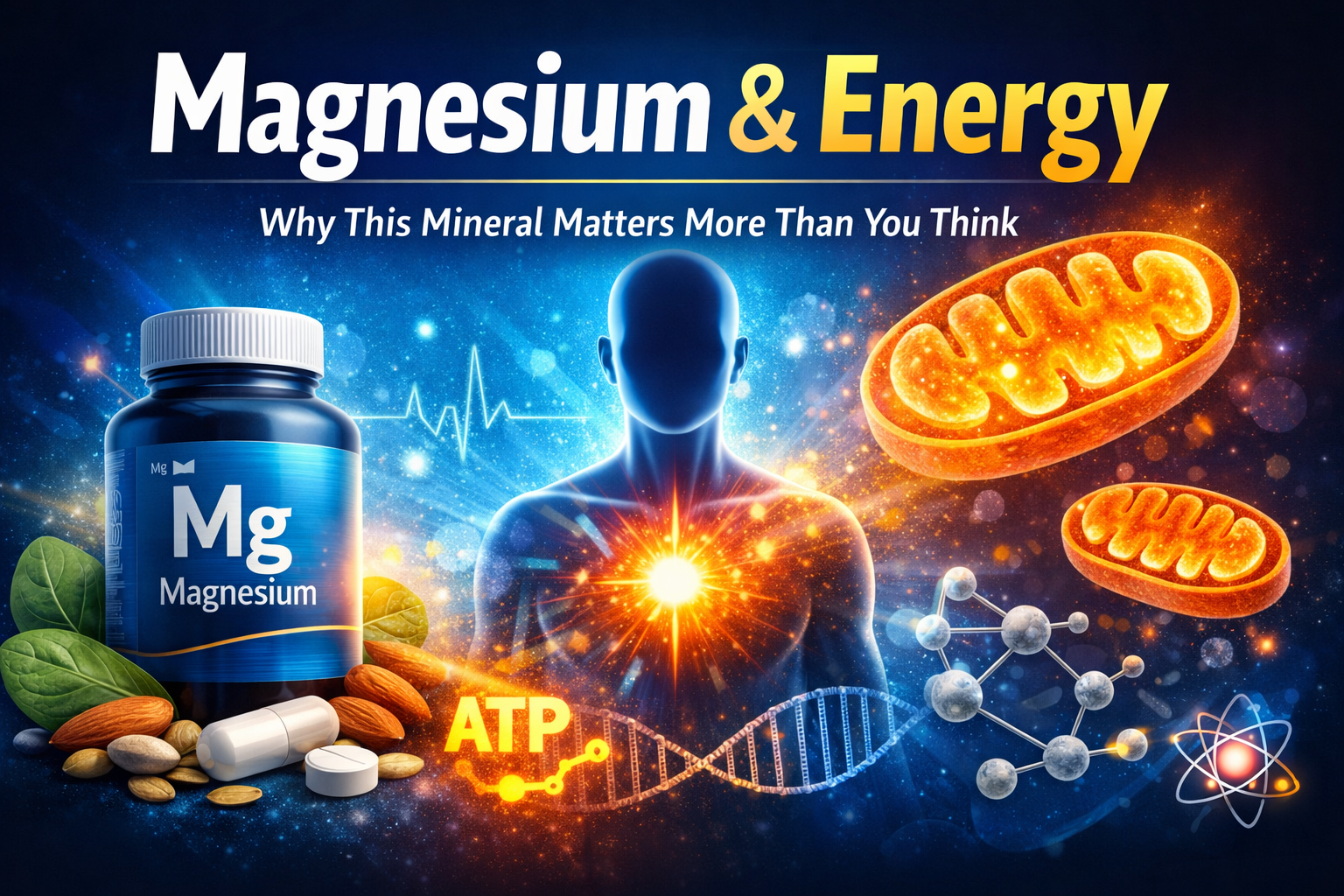
Magnesium and energy are closely connected, yet many people overlook how this essential mineral may influence fatigue and daily vitality. If you’ve been feeling low on energy lately, the reason may not be just sleep or routine, but how efficiently your body produces and uses energy at a cellular level.
If you’ve been feeling low on energy lately, you’re not alone.
Many people notice that, over time, their energy levels don’t feel as stable as they once did.
What’s surprising is that, in some cases, this may not be just about sleep or age, but about something much more subtle: nutrient balance.
One mineral that has gained increasing attention in research is magnesium. Often overlooked, it plays a central role in how your body produces and uses energy at a cellular level.
Magnesium and Energy: Can This Mineral Help Reduce Fatigue Naturally?
What You’ll Learn
How magnesium is connected to energy production
Why low magnesium levels may contribute to fatigue
What science suggests about magnesium and vitality
How to support your magnesium levels naturally
When supplementation may be considered
Magnesium is not a stimulant, it supports the biological processes that create energy inside your cells.
The Link Between Magnesium and Energy
Magnesium is involved in over 300 enzymatic reactions in the body. Many of these are directly related to energy production.
At the cellular level, your body produces energy in the form of ATP (adenosine triphosphate). Magnesium is required to activate ATP, meaning:
Without enough magnesium, your body may struggle to efficiently use the energy it already produces.
This is why some people experience:
Persistent fatigue
Low physical stamina
Mental tiredness
Muscle weakness
Even when sleep and diet seem adequate.
Energy is not just about how much you rest, it’s about how efficiently your body converts nutrients into usable fuel.
Why Magnesium Deficiency Is More Common Than It Seems
Modern diets and lifestyles can make it surprisingly easy to fall short on magnesium.
Common contributing factors include:
Highly processed foods
Lower intake of leafy greens and whole foods
Chronic stress (which increases magnesium demand)
Poor sleep quality
Age-related absorption changes
Research suggests that a significant portion of adults may not reach optimal magnesium intake levels.
Understanding the connection between magnesium and energy can help you make more informed decisions about your daily habits and nutrition.
How Magnesium Helps Energy Production in the Body
To understand why magnesium matters, it helps to look at how energy is actually produced inside the body.
Your cells generate energy through a process called mitochondrial respiration. This process converts nutrients into ATP, the molecule your body uses as fuel.
Magnesium plays a critical role in this process because:
It stabilizes ATP molecules
It activates enzymes involved in energy production
It supports mitochondrial efficiency
Without adequate magnesium, ATP cannot function properly, even if your body is producing enough of it.
This means you can feel tired not because you lack energy, but because your body cannot use it efficiently.
Fatigue is not always about “low energy”, sometimes it’s about inefficient energy utilization.
Can Magnesium Help With Fatigue? What Science Says
Several studies have explored the relationship between magnesium and fatigue, especially in older adults.
According to research published in journals such as Nutrients, magnesium plays a key role in cellular energy metabolism and neuromuscular function.
Findings suggest that:
Magnesium plays a role in reducing feelings of tiredness and exhaustion
It may support muscle function and recovery
It contributes to normal nervous system function
It may help improve sleep quality, indirectly impacting energy
A review published in journals such as Nutrients highlights magnesium’s role in energy metabolism, inflammation regulation, and neuromuscular function, all key factors in how energized we feel daily.
Fatigue is often multifactorial, and micronutrients like magnesium are part of the equation, not the entire solution.
Low Magnesium Symptoms That May Affect Energy
Magnesium vs Vitamin B12 vs Iron
Energy is influenced by multiple nutrients, and each plays a different role:
Magnesium - Cellular energy activation, good for general fatigue and muscle tiredness.
Vitamin B12 - Red blood cell production, good for deep exhaustion and brain fog.
Iron - Oxygen transport, good for weakness and shortness of breath.
This is why focusing on just one nutrient may not fully resolve fatigue. Magnesium works best as part of a broader nutritional foundation, not in isolation.
Signs Your Body Might Need More Magnesium
While only proper evaluation can confirm deficiency, some commonly reported signs include:
Frequent fatigue or low energy
Muscle cramps or tension
Difficulty relaxing or sleeping
Increased stress sensitivity
Occasional headaches
These signs don’t confirm deficiency on their own, but they can indicate that magnesium intake is worth reviewing.
Magnesium is also closely linked to sleep, one of the most important factors for daily energy.
It contributes to:
Nervous system regulation
Muscle relaxation
Production of melatonin (sleep hormone)
This means magnesium may support:
deeper, more restorative sleep
improved recovery overnight
more stable energy the next day
If your fatigue is related to poor sleep quality, magnesium may play an indirect but meaningful role.
Better energy often starts with better recovery.
Natural Sources of Magnesium
Before considering supplements, improving dietary intake is often the first step.
Magnesium-rich foods include:
Spinach and leafy greens
Nuts (especially almonds and cashews)
Seeds (pumpkin seeds are particularly rich)
Whole grains
Legumes
Incorporating these foods consistently may help support overall energy levels over time.
Recommended Daily Intake
General guidelines suggest:
Adult men: ~400–420 mg/day
Adult women: ~310–320 mg/day
However, individual needs may vary depending on:
Age
Activity level
Stress levels
Diet quality
Many people do not consistently reach these levels through diet alone. Some people explore magnesium supplements when dietary intake may not be sufficient.
One commonly available option is magnesium glycinate, known for its high absorption and gentle effect on digestion.
For example, some individuals choose options like Nature Made Magnesium Glycinate, which is widely used and produced under established quality standards in the U.S.
It’s important to note that supplementation should complement, not replace, a balanced diet.
Consistency matters more than intensity, small daily improvements in nutrient intake can lead to noticeable changes over time.
What Most People Get Wrong
Even when people take magnesium, results may be limited due to:
1. Wrong type
Not all magnesium forms are equal:
Oxide → lower absorption
Glycinate → higher absorption
Citrate → moderate, may affect digestion
2. Inconsistent use
Magnesium works best when taken consistently over time.
3. Expecting immediate results
Unlike stimulants, magnesium supports gradual improvements.
Magnesium is not a quick fix, it’s a foundational support for long-term energy.
Who Might Notice the Biggest Impact
Magnesium support may be especially relevant for:
People experiencing frequent fatigue
Those under chronic stress
Individuals with low intake of whole foods
People noticing reduced energy over time
How Much Magnesium Do You Need for Energy Support
Magnesium is just one piece of a larger puzzle.
Low energy can also be influenced by:
Sleep quality
Hydration
Blood sugar stability
Other nutrients (like B12 and iron)
Daily habits and activity levels
If you often feel a drop in energy during the day, you may also find this helpful: Natural Ways to Increase Energy Daily
Or if you feel tired even after sleeping: Why Do I Feel Tired All the Time Even After Sleeping?
Continue Exploring
To better understand your energy levels, you may want to explore:
Topical Reinforcement Paragraph
Understanding how nutrients like magnesium influence energy helps build a more complete picture of vitality over time. Rather than focusing on quick fixes, exploring how your body produces and uses energy, at a cellular level, can lead to more consistent and sustainable improvements.
FAQ
Does magnesium give you energy immediately?
Not exactly. Magnesium supports the processes that produce energy, but it does not act as a stimulant.
How long does magnesium take to affect energy?
Some people report gradual improvements over days or weeks, depending on their initial levels and overall health.
Can low magnesium cause fatigue?
Low magnesium levels may contribute to fatigue, especially when combined with other factors.
Scientific References
Research on magnesium and energy metabolism has been widely documented in peer-reviewed journals such as:
Nutrients (Journal) – Magnesium in energy metabolism
Journal of the American College of Nutrition
Sleep Medicine Reviews (related to recovery and energy regulation)
Medical Disclaimer
This content is for informational purposes only and does not constitute medical advice. Always consult a qualified professional for personalized guidance.
Disclaimer
This content is for informational purposes only and does not constitute medical advice.
Affiliate Disclosure
This article may contain affiliate references. When products are mentioned, we prioritize trusted and widely recognized brands.
Editorial Policy
All content is based on scientific evidence and reviewed for clarity and accuracy.
Someone you care about might need to hear this, share it with them.
Want to keep learning?
Subscribe to receive weekly content about strength, independence, well-being, and longevity.
Contact
Send your testimonial or contact us
info@masteractive.life
© 2026. All rights reserved.
About Our Project:
Editorial Policy
Medical Disclaimer
Affiliate Disclosure